
General & Preventive
Dental Hygiene
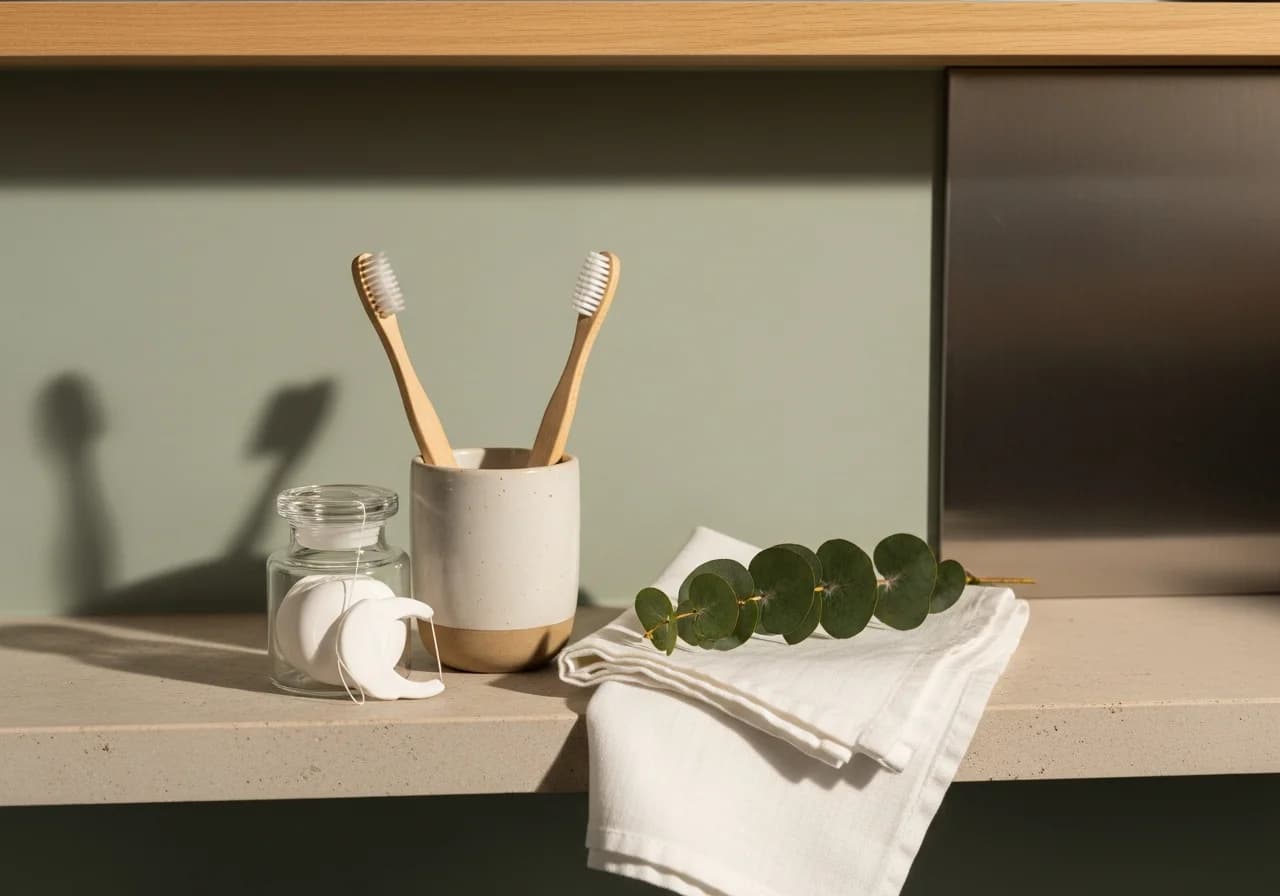
Brushing and flossing keep tartar from forming. Once it has formed, only a dentist can remove it — and how often you need that is different for everybody.
- Scale, polish and review
- 45 min
- Brush and floss at home
- 2× daily
- Recall interval, set for you
- 3–12 mo
Why the build-up matters
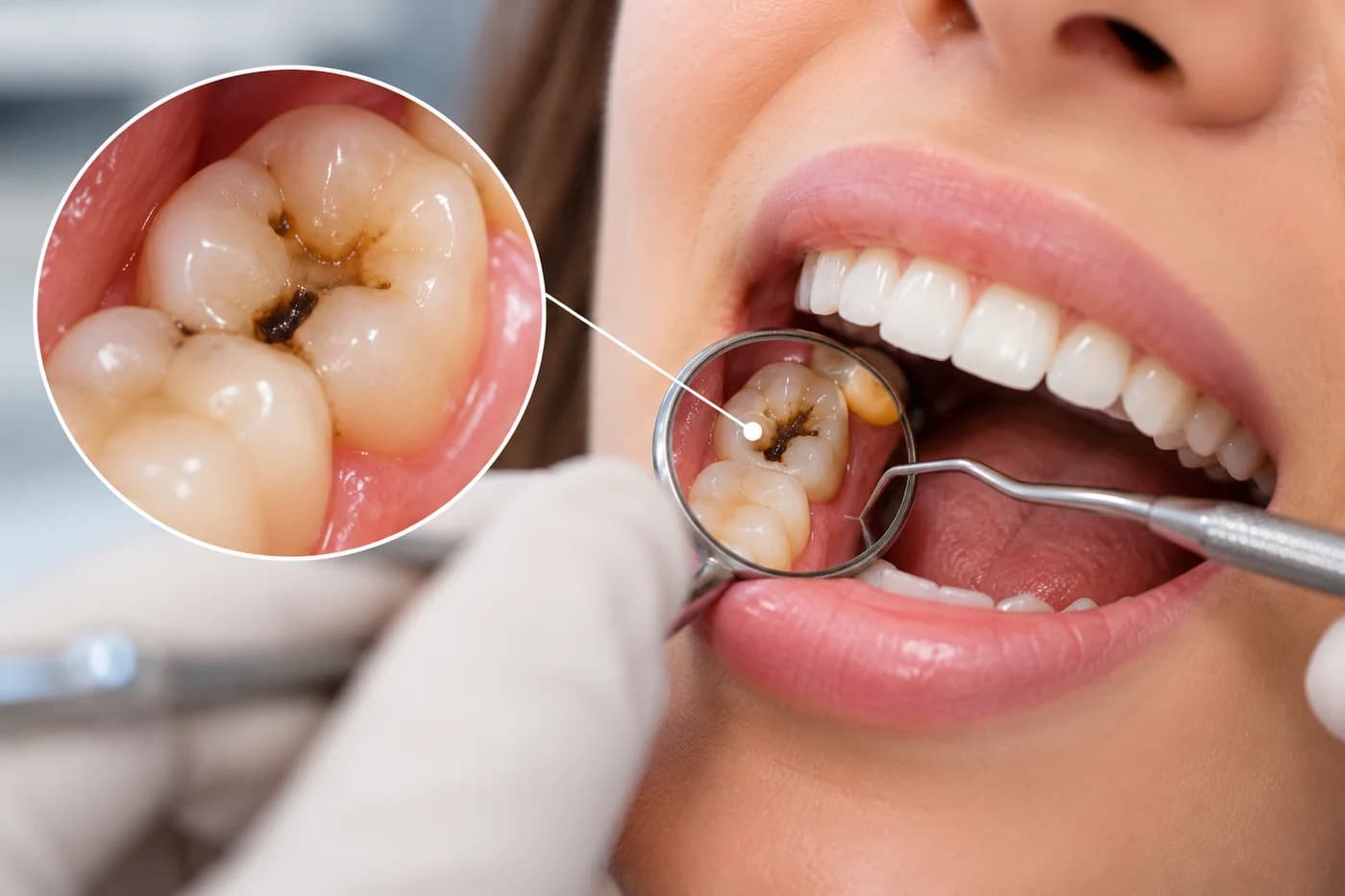
Over time tartar and stain accumulate on the tooth surface.
Read moreShow less about Why the build-up matters
You may notice the teeth looking discoloured, or the gums bleeding when you brush. That bleeding is gingivitis — and left alone it can progress to periodontitis, which takes bone with it.
Basic brushing
Hold the brush head at 45 degrees against the gum line and work in short back-and-forth semi-circles.
Read moreShow less about Basic brushing
Outer surfaces, inner surfaces, then the chewing surfaces — and tilt the brush vertically for the inside of the front teeth. Brush the tongue too; most of the bacteria that cause bad breath sit there.
Basic flossing
Wind about 45 cm of floss around the middle fingers of each hand, keeping 3–5 cm taut between them.
Read moreShow less about Basic flossing
Guide it between the teeth with a gentle zigzag rather than snapping it down, then slide it up and down against each tooth surface and just under the gum.
How often you should come
Every patient is different. After examining your gums we will tell you honestly whether six months is right for you, or whether three would serve you better — and we will explain why rather than just booking it.